At the board 3 min read
Checkmate, stalemate and dead positions
Three endings that do not depend on agreeing a draw
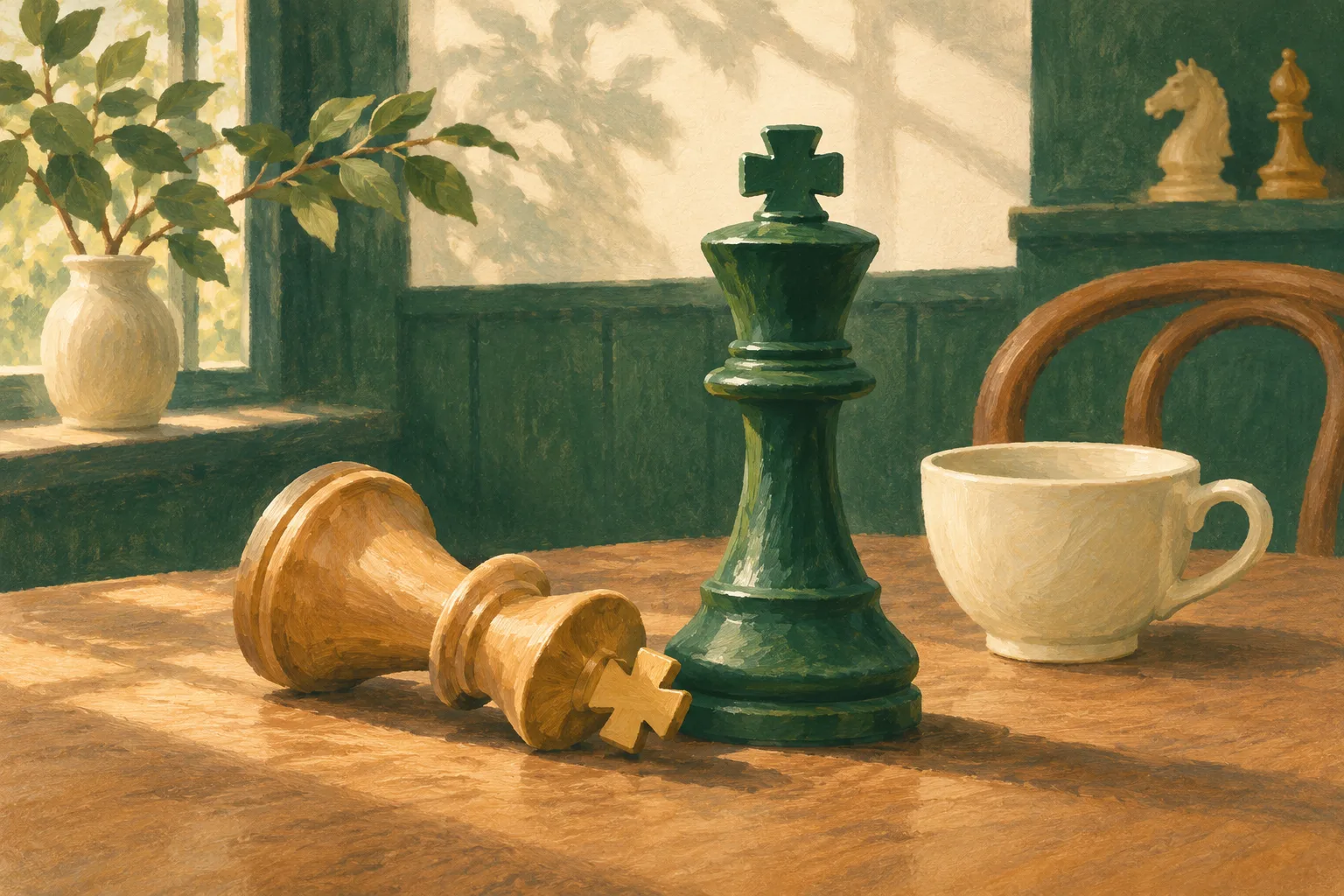
When a player has no legal move, first ask whether their king is in check. That one distinction separates checkmate from stalemate. A dead position is a different test: could either side ever give mate by a legal sequence?
Checkmate: the king has no legal escape
A checked player must remove the check with a legal move: move the king, capture the attacker, or block the line where possible. If none works, it is checkmate. You do not capture the king.
Here the queen on g7 attacks the black king on h8, and White’s king protects the queen. Black cannot capture it or escape. A legal checkmating move ends the game immediately; pressing the clock is not needed to make it mate.

Sources & further reading: [1]
Stalemate: no legal move, but no check
Move the queen to f7 in this second example. Black’s king is not attacked, but every available destination is. With no other black piece to move, the position is stalemate and the game is drawn.
Count all legal moves, not just king moves. A trapped king is not stalemate if another piece can move. When promoting or chasing a lone king, check that your next move either gives mate or leaves the opponent a legal move if you want to continue.

Sources & further reading: [1]
Dead position: mate is impossible for both sides
A position is dead when neither player can checkmate the other through any possible series of legal moves. Bare king against bare king is the clearest example. King and bishop against a bare king, or king and knight against a bare king, are also dead.
“I cannot force mate” is a different statement. Two knights against a bare king, for example, do not generally force mate but mate is possible with cooperative play. Do not use inability to force a win as proof of a dead position.
Material shortcuts are not a complete test for every position. Ask the arbiter about an unfamiliar case, especially when a time-expiry claim depends on whether one side could possibly mate.

Sources & further reading: [1]
Record the result before resetting
Checkmate, stalemate and a dead position end the game immediately, provided the move producing the position was legal. Stalemate does not need an offer or acceptance. Repetition and move-count claims follow different procedures.
Agree what result is being reported. If there is a disagreement, keep the final position and call the arbiter before resetting the pieces. Submit the result as the organiser instructs, then move discussion away from games still in progress.
Sources & further reading: [1]
Sources & further reading
Rules and rating information checked on 13 November 2026. Follow the current official rules and the event’s published conditions; the arbiter decides claims at your tournament.
Board pieces: Cburnett / Wikimedia Commons, CC BY-SA 3.0. Diagrams rendered from verified positions. Wikimedia Commons · CC BY-SA 3.0