At the board 2 min read
Castling: when it is legal
The king’s move, the rook’s move and the squares that matter

Castling moves two pieces but counts as one king move. In standard chess, the king travels two squares towards a rook, and that rook moves to the square the king crossed. Check the conditions before touching either piece.
Where the pieces go
For White’s kingside castling, the king goes e1–g1 and the rook h1–f1. Queenside is king e1–c1 and rook a1–d1. Black uses the same pattern on rank 8.
The notation is O-O for kingside and O-O-O for queenside. These examples concern standard chess; Chess960 has different starting arrangements and additional procedures.


Sources & further reading: [1]
The conditions checklist
Moving a king or rook back to its original square does not restore the right. If one rook moved, you may still retain castling on the other side, provided the king has never moved and all other conditions hold.
- Your king has never moved.
- The rook on the chosen side has never moved.
- Every square between king and rook is empty.
- The king is not currently in check.
- The square the king crosses and its destination are not attacked.
Sources & further reading: [1]
What about an attacked rook?
The rook itself may be under attack. What matters for attacks is the king’s starting, crossing and destination squares. A rook crossing an attacked square is not automatically a reason to forbid castling.
For White’s queenside castling, b1, c1 and d1 must be empty. The king’s route is e1–d1–c1: an attack on b1 alone does not prohibit castling. A square can count as attacked even by a piece that cannot legally move because it is pinned to its own king.
Sources & further reading: [1]
King first, then rook, then clock
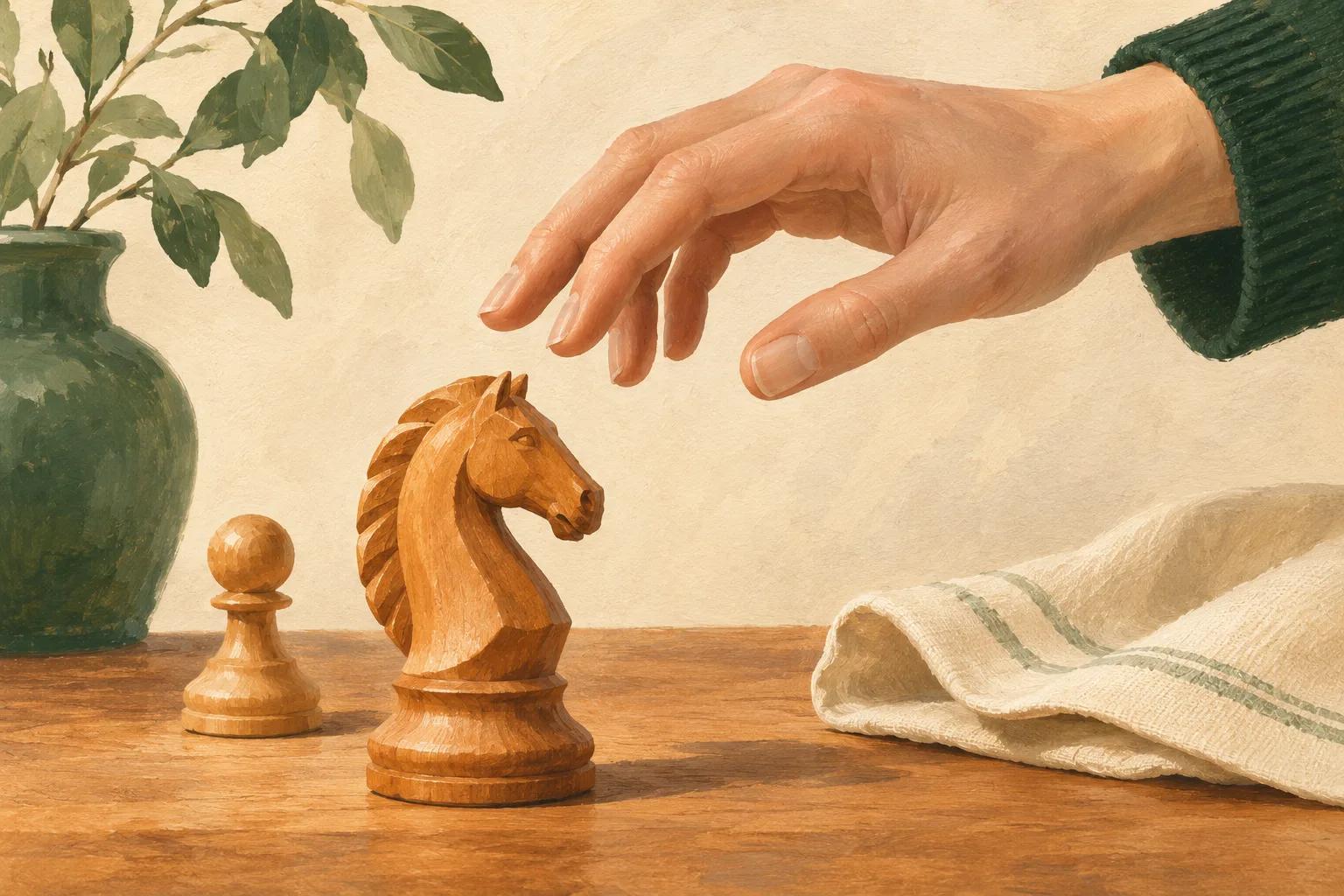
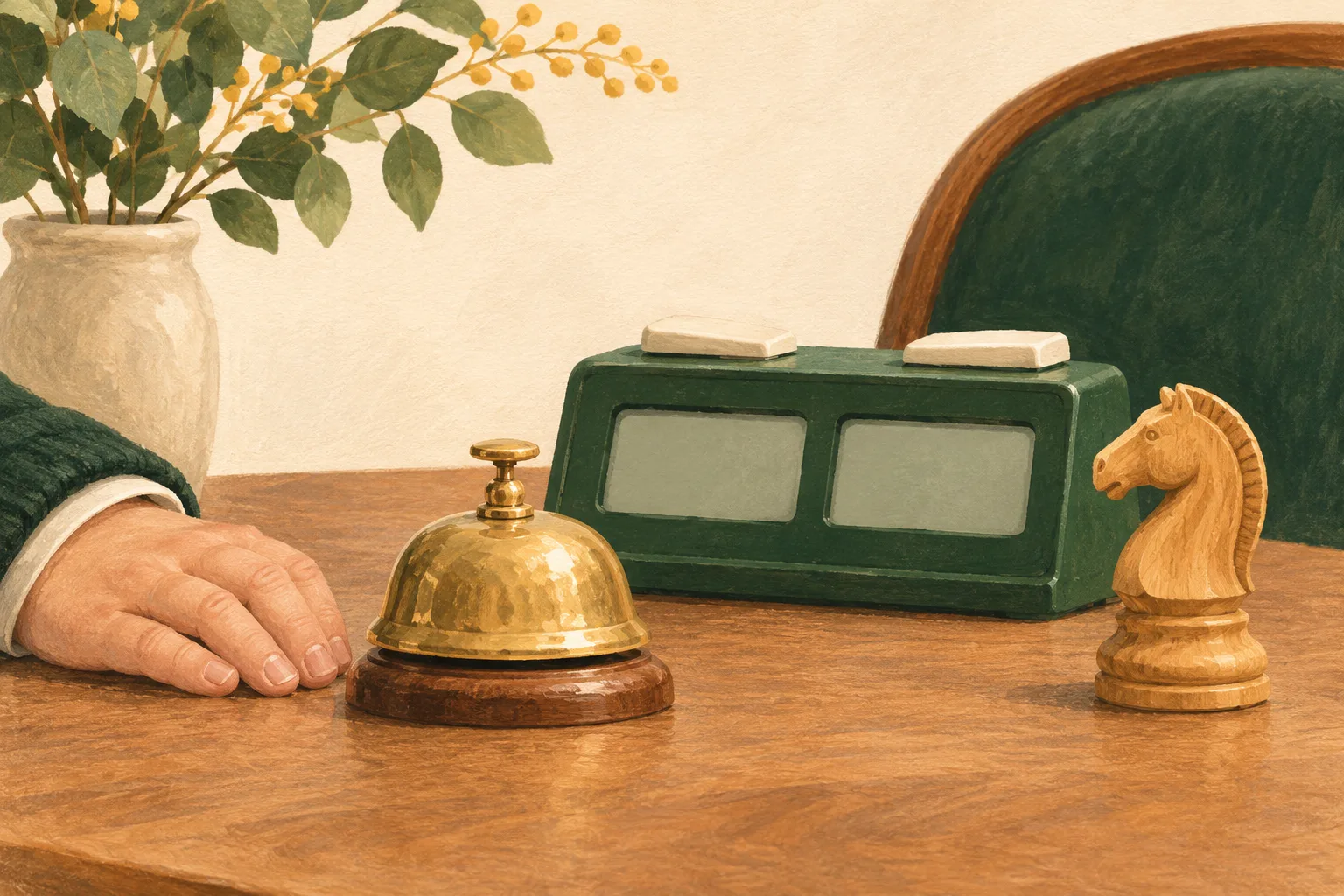
Use one hand: move the king first, move the rook, then press the clock. If you intentionally touch the rook before the king, you cannot castle on that side on that move; touch-move applies.
If you touch king then rook but castling there is illegal, you must make a legal king move if possible, which may include castling on the other side. If the king has no legal move, any legal move is available. Ask the arbiter if the sequence is disputed.
Sources & further reading: [1]
Sources & further reading
Rules and rating information checked on 13 November 2026. Follow the current official rules and the event’s published conditions; the arbiter decides claims at your tournament.
Board pieces: Cburnett / Wikimedia Commons, CC BY-SA 3.0. Diagrams rendered from verified positions. Wikimedia Commons · CC BY-SA 3.0