At the board 2 min read
Touch-move and adjusting pieces
When touching a piece commits you—and how to straighten one safely
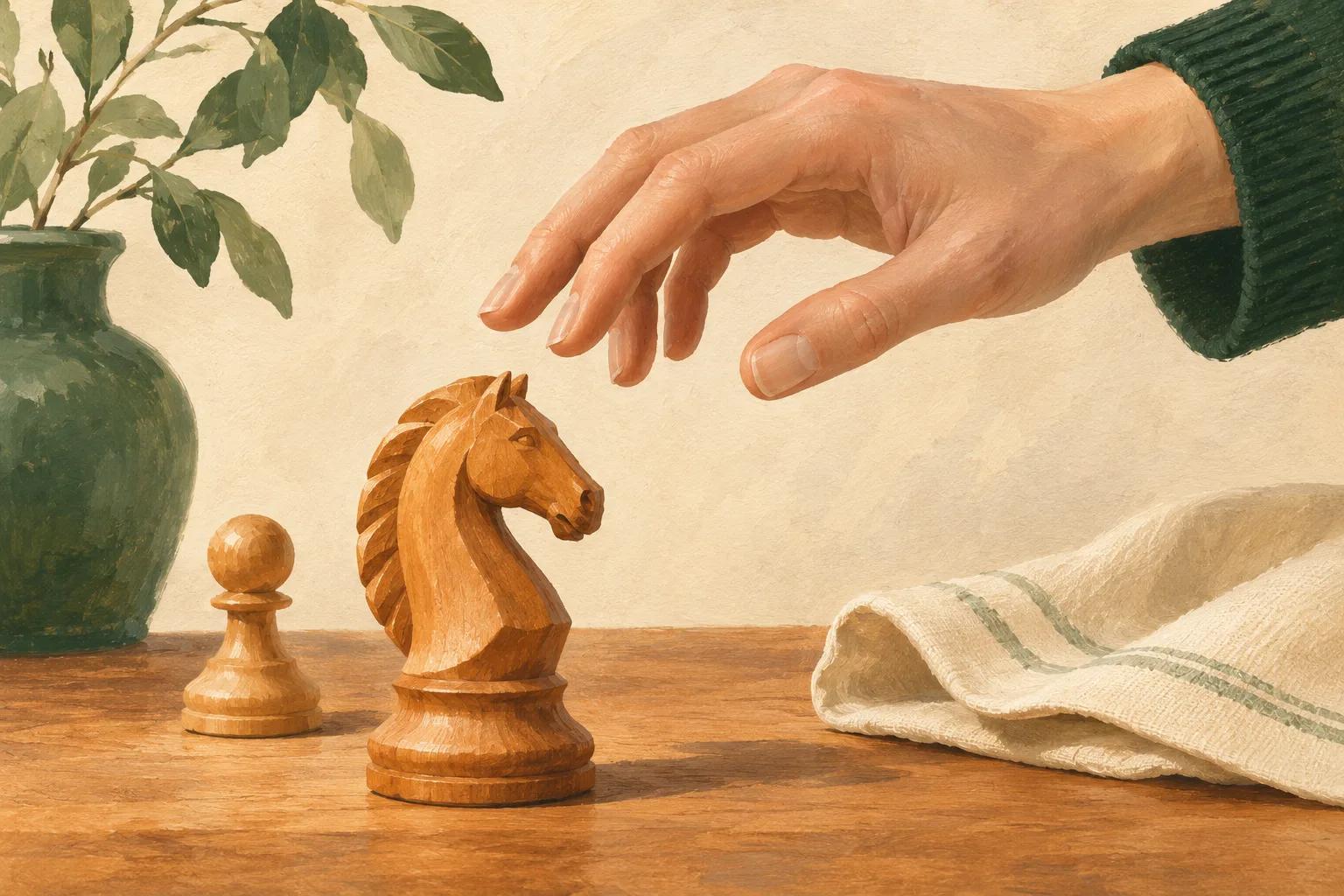
Online, you can click a piece and change your mind. At a tournament board, deliberately touching a piece can already commit you. A simple habit helps: decide first, then reach for the piece.
What counts as touching?
On your turn, intentionally touching one of your pieces means you must move it if it has a legal move. Intentionally touching an opponent’s piece means you must capture it if you legally can. A clearly accidental brush is different; contact is otherwise treated as intentional.
If you touch several pieces, the order matters. The first piece that can legally be moved or captured normally binds you. Touching both colours can require a capture with the touched pieces. Ask the arbiter about a complicated sequence rather than inventing a compromise.
Sources & further reading: [1]
Say “I adjust” before touching
If a piece is sitting across two squares, wait until your turn and clearly say “I adjust” or “j’adoube” before straightening it. This announces that you are adjusting its position on the square, not making a move.
Saying it after you have changed your mind does not undo touch-move. Nor is it permission to rearrange pieces while your opponent is thinking. Practise the words during casual games so the routine feels natural.
Sources & further reading: [1]
Touching and releasing are different moments
Touching your knight may commit you to the knight, but you can still choose among its legal destinations. Once you release it on a square as a legal move, you cannot take that move back—even if you have not pressed the clock.
For castling, move the king first, then the rook, using one hand. Touching the rook first can prevent castling on that side for this move. Promotion has its own commitment point: the choice becomes final when the new piece touches the promotion square.
Sources & further reading: [1]
If you disagree, keep the position
Call the arbiter promptly and explain what was touched and in which order. Pause the clock when necessary to ask for assistance. Do not move pieces around to demonstrate until asked.
You lose the right to claim an opponent’s touch-move infringement once you deliberately touch a piece to move or capture it. Make the claim before continuing. Touch-move does not make an otherwise illegal move legal.
Sources & further reading: [1]
Sources & further reading
Rules and rating information checked on 13 November 2026. Follow the current official rules and the event’s published conditions; the arbiter decides claims at your tournament.